
Deck Builders for Buda's New Backyards
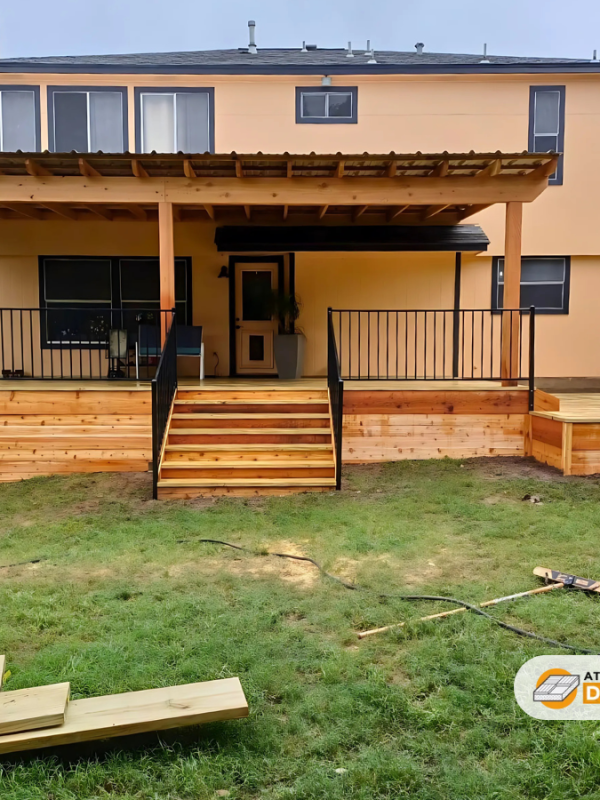
Deck builders in Buda, TX mostly start with a blank yard: the south corridor’s neighborhoods are new enough that the deck hasn’t been built yet. We design and build those first decks right, on clay-smart footings, sized for how the household actually lives.
Request Free Quote


First-Deck Country
Buda’s story is newer than the northern suburbs’: most of its neighborhoods went in over the last decade and a half, which means most of its backyards are still deciding what they want to be. The standard-issue concrete patio came with the house; the deck mostly hasn’t happened yet. That makes Buda first-deck country, and first decks are a build we take seriously, because whatever goes in now sets the yard’s next twenty years. Request an estimate and the visit starts with the blank page, which is the best page there is. Every deck decision on a blank yard is still cheap; that window closes exactly once.
A first deck built thoughtfully skips the mistakes the metro’s older suburbs are now paying to fix: it’s footed for the soil instead of the minimum, sized for the actual household instead of the model home’s staging, and built by a crew that plans to see it again. Buda gets to learn from everyone else’s builder-grade decade, and we’re happy to be the ones applying the lesson. It’s a genuine advantage, and Buda homeowners get to spend it.
Designing the Blank Yard
Starting from nothing is a genuine advantage if the design work respects it. No existing structure dictates the footprint, so the layout follows the household: where the kitchen door wants the grill, where dinner wants shade at seven, where the traffic to the yard actually runs. New deck installation in Buda gets to answer those questions cleanly, and the answers are different for a household of teenagers than for a couple hosting twice a year.
We also design for the buyer after you, quietly. The south corridor moves; households relocate as jobs and schools shift, and a well-built deck with a written scope and a documented maintenance history reads beautifully at resale. Nobody builds a deck for the next owner, and nobody regrets that the deck happens to show that well when the sign goes up. The scope notes the phasing plan explicitly, so the future addition inherits engineering instead of improvisation, and the second chapter costs what the first one planned for.
For new-construction buyers still in the option period, one useful extra: a deck inspection mindset applied early. If the house came with a small builder deck, we’ll read it honestly before you invest in extending something that was priced to close a sale.
Budget-shaping happens early and honestly. First decks are often first big yard investments, and there’s almost always a version that fits: a phased footprint planned for later expansion, a material tier that funds the frame properly, or a layout that delivers the daily-use core now and the party wing later. Designing to your number beats admiring a rendering you won’t build, and the phased plan costs nothing extra when it’s drawn that way from day one.

Clay, Young Trees and Full Sun
The ground rules south of Austin echo the corridor’s: blackland clay that swells and shrinks with the moisture cycle, which makes footing depth the specification nobody sees and everybody depends on. Buda’s first decks get their foundations designed for that movement on day one, which is precisely the line item the builder-grade originals up north skipped and the reason they’re aging the way they are. The scope names the depth and the reasoning, so the most important part of your deck is also the best documented.
Above ground, the defining condition is sun. Young neighborhoods mean young trees, and young trees mean Buda decks live in more direct exposure than almost anywhere we build: real UV working on every finish, every season. That pushes composite decking into a strong position for full-speed households, keeps wood decks honest about their staining clocks, and makes shade planning a design element rather than an afterthought. The trees are coming; the deck just has to be right until they arrive. Composite’s honest fine print, warmer underfoot in full sun and still wanting its wash, gets said out loud here too, because a material chosen with open eyes stays chosen. Shade structures get their anchor points planned into the frame now even when the shade itself waits a season, which costs nearly nothing during the build and can’t be added gracefully after it.
Water rounds out the ground story: newer subdivisions move their drainage deliberately, and a deck’s footings need to stay out of the paths the engineers drew. We read the lot’s drainage plan the same visit we read its sun, because a footing that stays dry is a footing that stays, and the south corridor’s storm bursts test that early and often.
Kept Right From Year One
The care cycle means the most on a first deck, because a deck that starts its maintenance life on schedule never develops the backlog that turns into big invoices. Wood builds leave with their deck staining schedule in writing and a crew that carries it; every build gets its hardware and structure looked at as it ages; and the same people who set the footings answer the phone in year five. Buda’s decks get to be the counterexample to the corridor’s cautionary tales, starting now. First decks deserve first-rate habits, and both are cheapest at the start.
That’s the quiet advantage of hiring the full-lifecycle crew for the first build: the deck’s whole history lives in one place from its first day, and every future decision gets made by people who know exactly what’s under the boards, because they put it there. One address, one history, one crew: that’s the model, and a first deck is exactly where it starts paying. The file that begins at the first footing follows the deck for life.
The habit worth starting in year one is the spring walk: five minutes pushing on rails, glancing at post bases, and noting anything that changed over winter. On a new deck it’s almost always a boring walk, and boring is the point. Decks that get walked stay boring for decades, and we’d rather teach the habit now than sell the repair later.
The South Corridor Is on the Route
Buda sits on the working map’s southern leg, and the leg runs weekly: builds and maintenance keep us moving between south Austin and the corridor towns, so estimate visits book promptly and schedules hold. A crew that’s already passing your exit is the difference between a maintenance plan and a maintenance intention. The corridor’s growth means we’re south more weeks than not, and the route only thickens as the neighborhoods do.
The standard travels intact, and recent deck projects shows it: the same footings, the same written scopes, the same honest material talks, now pointed at the metro’s newest backyards. Yours can be the one that starts right.

Frequently Asked Questions
Do deck builders in Buda handle new-construction homes?
That’s most of our Buda work: new homes whose backyards are still blank pages. First decks get designed from how your household actually lives, footed properly for the clay, and documented in a written scope. Starting from nothing is the best design brief there is, and we treat it that way.
Can you extend the small builder deck that came with my house?
Sometimes, and we read it honestly first. Builder-grade originals were priced to close sales, and some shouldn’t carry an extension. If the frame checks out, expansion is on the table; if it doesn’t, starting fresh usually costs less across the decade. You get the structural read and both versions priced.
What's the best deck material for Buda's sun?
Young trees mean full exposure, and full exposure strengthens composite’s case: it skips the fast staining clock our UV runs. Wood stays in the running on budget and feel, with its schedule stated in writing up front. Samples come to the estimate and sit in your actual sun, which settles most debates.
Does Buda's soil affect deck building?
The blackland clay does, meaningfully: it swells and shrinks with moisture, and shallow footings ride that movement until posts lean. Proper depth neutralizes it, which is why the foundation is the most important line in any Buda scope, and why we won’t price one from a photo of your grass.
How quickly can you get to Buda?
We work the southern corridor weekly, so visits book on normal scheduling rather than waiting on a special trip south. Storm checks get priority after weather. Call during business hours, Monday through Friday 8 to 5, and you’ll have a real date before the call ends.
Do new decks in Buda need HOA approval or permits?
Most newer neighborhoods here review exterior projects, and city permitting applies by size, height and attachment like everywhere in the metro. Both run through the written scope and our trusted third-party partners without becoming your homework, and the timeline accounts for the approval window from day one.
Closing
If your Buda backyard is still a blank page, let’s write it right the first time. Reach our team or call 512-900-6030 and we’ll bring the straight answers south.
