
Deck Inspection in Austin: The Full Picture
A deck inspection in Austin should cover the parts you can’t see from a lawn chair: framing, footings, the ledger connection, rails and stairs. We document all of it in writing, with photos, and tell you plainly what it means.
Request Free Quote


When an Inspection Earns Its Keep
Most inspection calls come from four situations, and each one deserves a different level of scrutiny. You’re buying a house with a deck and want to know what you’re inheriting. You’re selling and want the deck’s condition documented before a buyer’s inspector characterizes it for you. A hard storm season just ran through and something feels different underfoot. Or the deck’s simply reached the age where guessing stopped being comfortable. Request an inspection visit and tell us which one you’re in, because it shapes what we look hardest at.
There’s a fifth reason people don’t say out loud: the deck bounces, or a rail moved at a family gathering, and now it’s on your mind every time someone steps outside. That instinct is worth trusting. Decks rarely announce a structural problem loudly before it matters, and the quiet symptoms are exactly what an inspection is built to catch. We’d rather look at a deck that turns out fine than have you spend a season avoiding your own backyard.
Storm-season calls deserve their own mention, because hail and straight-line wind don’t damage decks the way people picture. The dramatic damage is rare; the common damage is a connection that shifted, flashing that lifted just enough to start admitting water, or a rail post that took a branch and now moves a few degrees it didn’t before. None of it photographs well for an insurance claim without someone documenting it properly, and all of it is exactly what we’re looking for after weather’s been through.
What We Inspect, Point by Point
Under the deck first, because that’s where the truth lives. Footings and post bases, checked for movement, soil contact and rot at the ground line. Beams and joists, probed at the ends and crowns where water sits. Hardware and fasteners, looked at for corrosion, backing-out and the undersized connections common on older builds. On raised decks, bracing and post height get checked against what the structure’s actually carrying, because a deck that was fine holding a table sometimes got a hot tub later.
Then the house connection. The ledger board and its flashing get more of our time than any other single element, because a failed ledger is the most serious failure a deck can have and the flashing above it is the part nobody maintains. We check the bolts, the spacing and what the water’s been doing behind it.
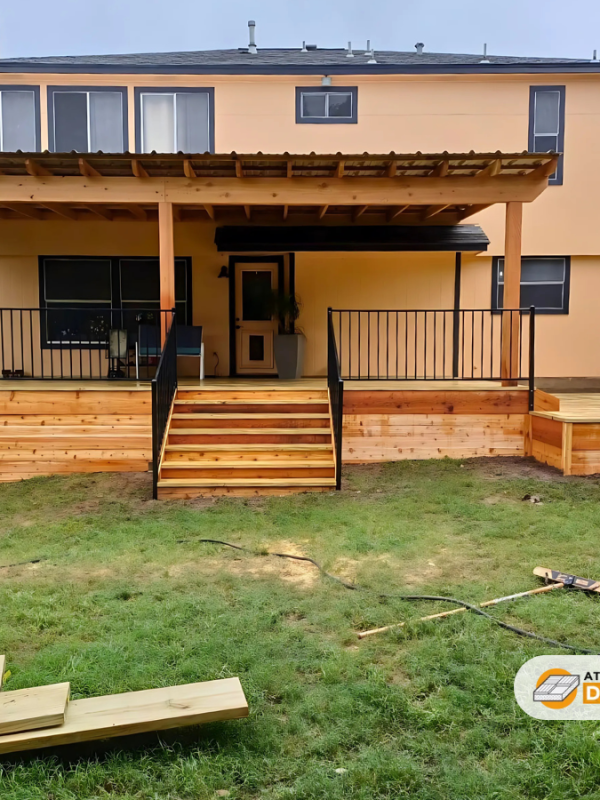
Then everything a person touches. Rails get a real load lean at the posts, not a polite wiggle. Stairs get checked at the stringers, treads and their connections top and bottom. Boards get walked and probed where they look tired, and drainage gets read from the stains it leaves behind. By the end there isn’t much about the deck we haven’t put a hand or a probe on. It’s unhurried on purpose. An inspection rushed to fit a slot finds what’s convenient, and this visit only has value if it finds what’s there.

What You Get Afterward
The deliverable is a written report in plain language: what we found, where it is, what it means, and how urgent it actually is, with photos attached to every finding so you can see what we saw without crawling under there yourself. Findings come ranked, because a corroded fastener and a rotted post base are not the same conversation, and treating everything as an emergency helps nobody. Reports are written for homeowners first, but they hold up fine when a buyer’s agent, an insurance adjuster or another contractor reads them, because findings tied to photos don’t need anyone’s benefit of the doubt.
If something needs work, the report feeds straight into a deck repair scope without a second diagnosis visit. If the structure’s condition points the bigger direction, we’ll say that plainly and walk you through what deck replacement would involve, with the reasoning in writing so you can sit with it rather than decide on the spot. Neither path obligates you to us for the work; the report is yours, and it’s written to be useful whoever holds the drill.
Urgency ranking is the part owners thank us for later. A finding like surface checking on ten-year-old boards is a watch item, not a work order. A soft post base is a this-season conversation. A ledger showing water intrusion is a stop-and-address item, and the report says so in those words. You should finish reading it knowing what to do first, what can wait, and what just needs eyes again next year.
When the Deck Passes
Plenty of decks pass, and a clean report is worth real money at a home sale, because it answers the buyer’s scariest question before their inspector raises it. It’s also worth something quieter at home: knowing the thing your family stands on has been looked at by someone who knew where to look. Either way you get the same documentation, and a pass comes with the small stuff worth watching noted for next time.
Older wood decks pass more often than people fear, especially ones that were built attentively and kept finished. Age alone isn’t a verdict. Neglect is what writes the bad reports. The inspection interval we suggest for a passing deck reflects its build quality and exposure, not a one-size calendar, and a well-kept deck earns the longer end of it.
The watch list matters as much as the verdict. Every passing report ends with the handful of spots we’d check first next time: the post base nearest the downspout, the board run that gets the most afternoon sun, the stair connection that carries the traffic. It turns the next inspection, and your own spring walks, into a five-minute check of known places instead of a cold start.
Between Inspections
A deck that gets professional eyes every few years and owner eyes every spring almost never surprises anyone. Between our visits, the maintenance side of the calendar does the protective work: deck staining on the schedule your exposure sets, and a five-minute walk each season pushing on rails and glancing at post bases.
And if you’re planning changes anyway, an inspection is the right first step before money gets spent. It tells you whether the existing structure can carry what you’re imagining, whether footings would need help first, or whether the honest path is a fresh deck installation built for the plan instead of an upgrade balanced on a question mark.
We inspect across the metro, from Cedar Park through central Austin, on decks of every age and origin, and scheduling follows the same regular hours as everything else we do.
The standard we hold inspected decks to is the one our own builds are held to, and recent deck projects shows what that standard looks like when it’s ours from the first footing. When yours measures up, the report says so without hedging.

Frequently Asked Questions
How long does a deck inspection take?
Under an hour for most residential decks. Larger, raised or multi-level structures run longer because there’s more framing to put eyes on. The written report with photos follows the same day in most cases, so the visit and the answers land close together instead of leaving you waiting on a verdict.
How much does a deck inspection in Austin cost?
It depends on the deck’s size and complexity, so we quote it when you book rather than publishing a number that’s wrong for half the decks in town. What we can tell you up front: it’s the cheapest structural answer you can buy, and if repairs follow, the diagnosis work is already done.
Should I get a deck inspected before buying a house?
Yes, and before the option period ends if you can manage it. General home inspectors do good work, but a deck-specific look goes deeper on framing, footings and the ledger connection, which are exactly the expensive surprises. A documented deck condition is negotiating information you want on your side of the table.
What happens if you find problems?
You get them ranked by urgency in the report, with photos, and nothing turns into a sales pitch on the spot. Safety items get flagged clearly so you know what to stop using. Everything else gets context: what it costs to address now versus what it becomes if it waits. The decision stays yours.
How often should a deck be inspected?
Every few years for a deck in good standing, sooner if it’s older, heavily loaded, or just came through a rough storm season. Attached decks deserve a slightly shorter interval than freestanding ones because the ledger connection concentrates so much of the risk. We’ll suggest an interval that fits your deck when we see it.
Do you inspect decks you didn't build?
Most of the decks we inspect were built by someone else, and it doesn’t change the work. The structure tells us how it was put together and where it’s struggling. We hold it to the same standard we build to, and the report reads the same whether the original builder was us, another company or a previous owner.
Closing
If your deck’s been on your mind, get the full picture and stop wondering. Reach our team or call 512-900-6030 and we’ll put real eyes on it.
